
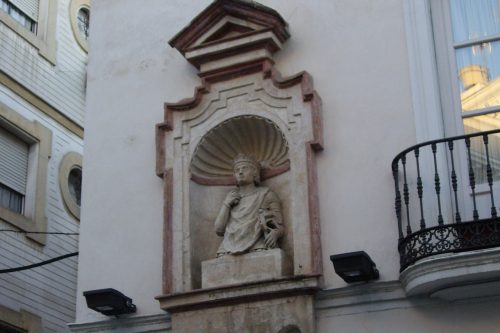
King Pedro of Castile and León, known as Pedro el Cruel, ruled from 1350 to 1369. His connection to Seville is remembered today in the historic street Calle del Rey Don Pedro, a name that comes with a dramatic story.
Legend has it that one night, the king was walking the streets of Seville incognito—either pursuing a secret affair or checking that no crime went unpunished, as claimed by the city’s mayor, Domingo Cerón. During his walk, Pedro got into an altercation with a stranger. Swords were drawn, and the king fatally struck the man.
An old woman, alerted by the noise, peered from her window by candlelight and witnessed the deadly encounter. Startled, she dropped her candle onto the street below. The next morning, the murdered man was identified as a noble from the Guzmán family, supporters of Pedro’s rival, his half-brother Henry. When questioned, the old woman described the killer—and Pedro realized that he himself had committed the crime.
Bound by his promise to punish the murderer, Pedro found a clever solution. He presented a box, claiming it contained the head of the assassin, to be displayed at the site of the killing. After his death, the box was opened to reveal a plaster bust of Pedro’s own head.
To commemorate this story, the street where the incident occurred was renamed “Cabeza del Rey Don Pedro” (The Head of King Pedro), and the adjoining street became “Candilejo” (Candle), honoring the light that revealed the king’s crime. Today, these streets are a fascinating stop on historical walking tours of Seville, offering a glimpse into the city’s rich medieval past.